

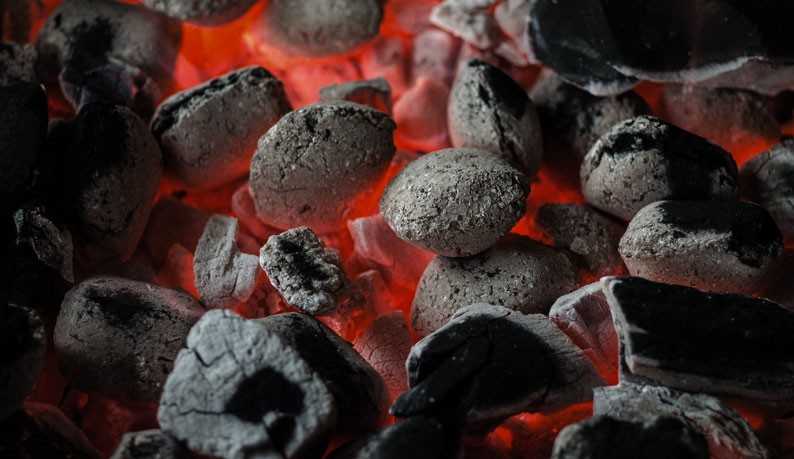
While barbecuing is a summer staple everyone agrees on, debates about the potential risks of charcoal grilling resurface every year. On top of that, poor-quality charcoal that crumbles quickly and doesn’t get hot enough can turn your BBQ party into a real challenge, making it nearly impossible to achieve perfect grilling. What types of charcoal should you choose, what are the essential criteria, what risks exist and how can you avoid them? Here’s what you need to know.
Why can charcoal be harmful to your health?
In general, any burning material can be carcinogenic due to polycyclic aromatic hydrocarbons (PAHs) and heterocyclic amines (HCAs): two molecules formed at very high temperatures. These can develop when food comes into direct contact with flames. Whether inhaled or ingested, these toxic molecules are carcinogenic. However, if you follow a few safety rules, the risk is very low. Several studies by the French Agency for Food, Environmental and Occupational Health & Safety (Anses) have shown that the risk of overexposure to these molecules is “very limited.”
How to minimize toxic risks when using charcoal?
To prevent these chemical compounds from forming, food should be placed at a reasonable height (about 10cm) above the fire, so that cooking is done by the heat of the embers, not the flames. The temperature should be around 220°.
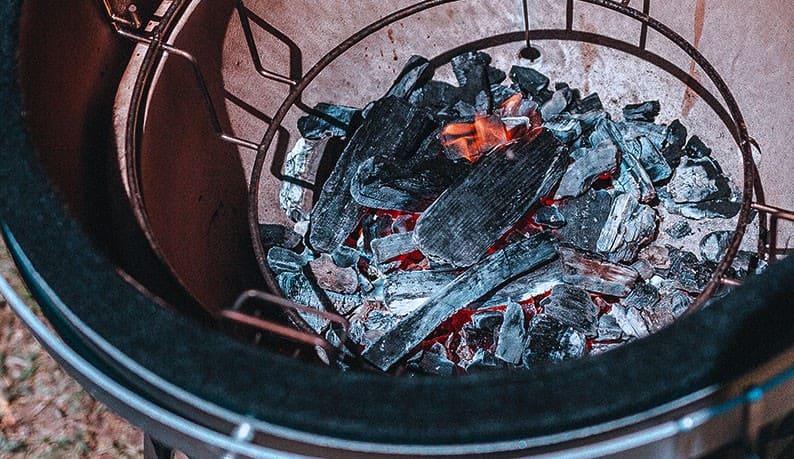
Key criteria for choosing quality charcoal
Charcoal can be made from different types of wood, and the choice of wood plays a crucial role in grilling—just as it does when smoking food on your barbecue. If you want to smoke your food with your Kokko, follow our practical guide!
1 - Choose refined charcoal
To be sure you’re buying quality charcoal, it’s best to choose refined charcoal over ordinary charcoal. Refined charcoal is purer, meaning it contains as little organic matter, moisture, and tar as possible, resulting in a much cleaner burn. Its carbon content should be above 80%. To check, simply look at the information on the packaging.
Also, the larger the pieces, the less dust they contain and the easier they are to light.
2 - Hardwood or softwood?
For grilling vegetables, fish, tender meats, or plant-based alternatives—if you’re preparing a vegetarian barbecue—it’s best to choose charcoal made from softwood, which lights more easily and reaches higher temperatures. These types of charcoal are sold by the litre.
If you want to grill larger cuts, for longer cooking times or in greater quantities, charcoal made from hardwood is highly recommended. It may be a bit harder to light, but it burns much longer. These hardwood charcoals are sold by the kilo.
In general, to ensure you’re choosing quality charcoal, look for labels such as “restaurant quality charcoal” or “artisan charcoal for grilling.”
3 - Check the origin of your charcoal
Finally, pay close attention to where your charcoal comes from. Imported charcoal is often linked to major issues such as deforestation and labor exploitation. Always prioritize charcoal made in France. Some brands even offer charcoal “from sustainably managed French forests.” To make the right choice, look for these two certifications: FSC and PEFC, which guarantee sustainable sourcing.
Are there more eco-friendly alternatives to charcoal?
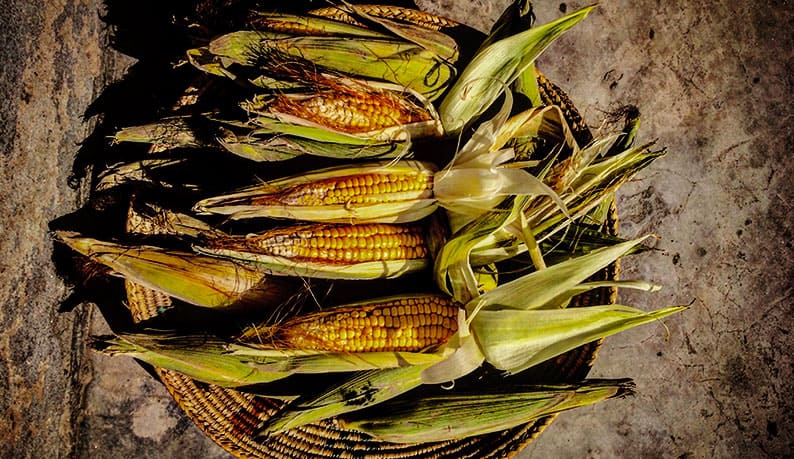
You can absolutely barbecue without using traditional charcoal. There are alternative fuels available, such as coconut shells, vine shoots, corn cobs, or olive pits. These options are more eco-friendly and will also add unique flavors to your grilling, though they won’t last as long as wood charcoal.
Wondering which accessories will help you save charcoal and optimize lighting?
The stainless steel charcoal basket for holding your charcoal
The ash tool in stainless steel with an acacia handle for removing ash from your kamado
The gas lighter to avoid any risk of burns
You can also upgrade your perforated cast iron plate, available in 3 sizes!
Now that you know which charcoal to choose for your next BBQ party, stay ahead of the curve by discovering the top food trends for 2020!


