


Understanding how a kamado works may seem complex at first, but this ancient barbecue offers an unrivaled culinary experience. Originating in Japan over 3,000 years ago, the Kamado Kokko now stands out for its exceptional versatility, letting you grill, smoke, roast, and even bake pizzas to perfection.
For new users, learning how to use a kamado is an essential first step. This comprehensive guide will walk you through every stage, from how to choose your kamado to how to clean a kamado to extend its lifespan. In the following sections, you'll discover lighting techniques, temperature control, and maintenance tips to help you master the Kamado Kokko.
What makes the Kokko model unique
The Kamado Kokko is the modern evolution of an ancient culinary tradition. This section explores the features of this unique cooker and its advantages for outdoor gastronomy enthusiasts.
What is a Kamado?
A Kamado is a traditional, egg-shaped oven whose origins date back over 3,000 years in Japan. Unlike conventional barbecues, the Kamado stands out for its thick ceramic body that efficiently retains heat. This ingenious design is the key to how a kamado barbecue works: the ceramic stores heat and distributes it evenly throughout the cooking chamber.
The fundamental principle of a Kamado is its controlled ventilation system. With two strategically placed vents—one at the bottom for air intake and one at the top for exhaust—this system lets you precisely regulate the internal temperature. This setup explains how a kamado works and why it can maintain stable temperatures between 80°C and 400°C for hours on end.
Versatility is the key strength of a Kamado. This multifunctional cooker allows you to:
-
- Sear at high heat
- Slow-cook at low temperature
- Smoke at low and high temperatures
- Cook like a traditional oven
- Bake crispy pizzas
- Roast meat and vegetables to perfection
What makes the Kokko model unique
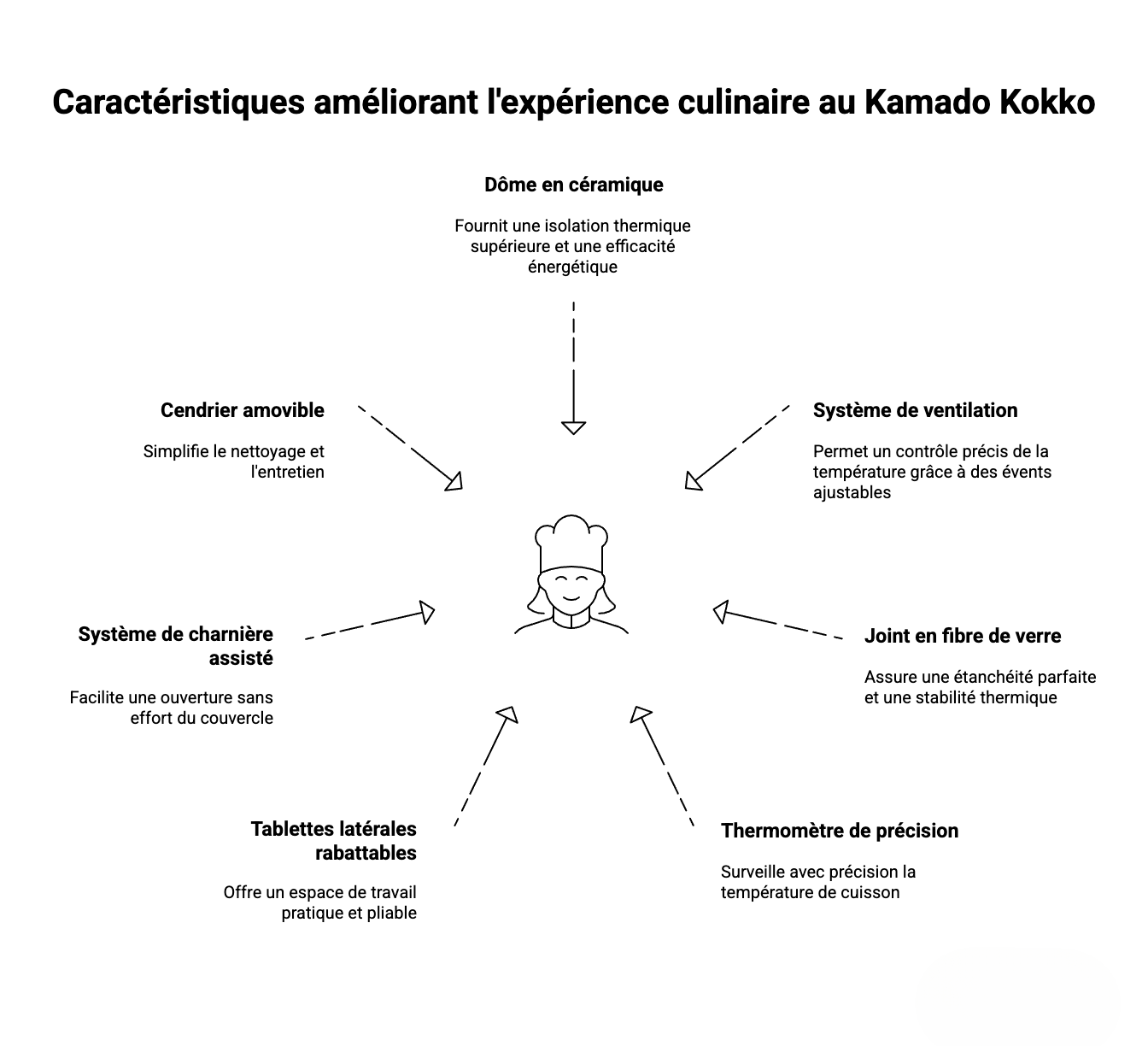
The Kokko Kamado stands out with several specific features that enhance the culinary experience. First, its premium ceramic dome provides exceptional thermal insulation. This insulation not only retains heat but also optimizes charcoal consumption, making the appliance economical to use.
The Kokko’s ventilation system has been meticulously designed with adjustable vents that allow precise temperature control. For those wondering how to use a Kokko kamado efficiently, the answer lies in mastering these airflow settings, which directly influence cooking intensity.
Another notable feature is its heat-resistant fiberglass gasket that ensures a perfect seal. This gasket prevents unwanted air leaks and contributes to thermal stability, a crucial aspect for understanding how a kamado barbecue works at its best.
The Kokko model also features practical built-in accessories such as:
-
-
-
-
A precision thermometer on the lid
- Foldable side shelves
-
An assisted hinge system for effortless opening
-
A removable ashtray for easy cleaning
-
-
-
Why choose a Kokko Kamado?
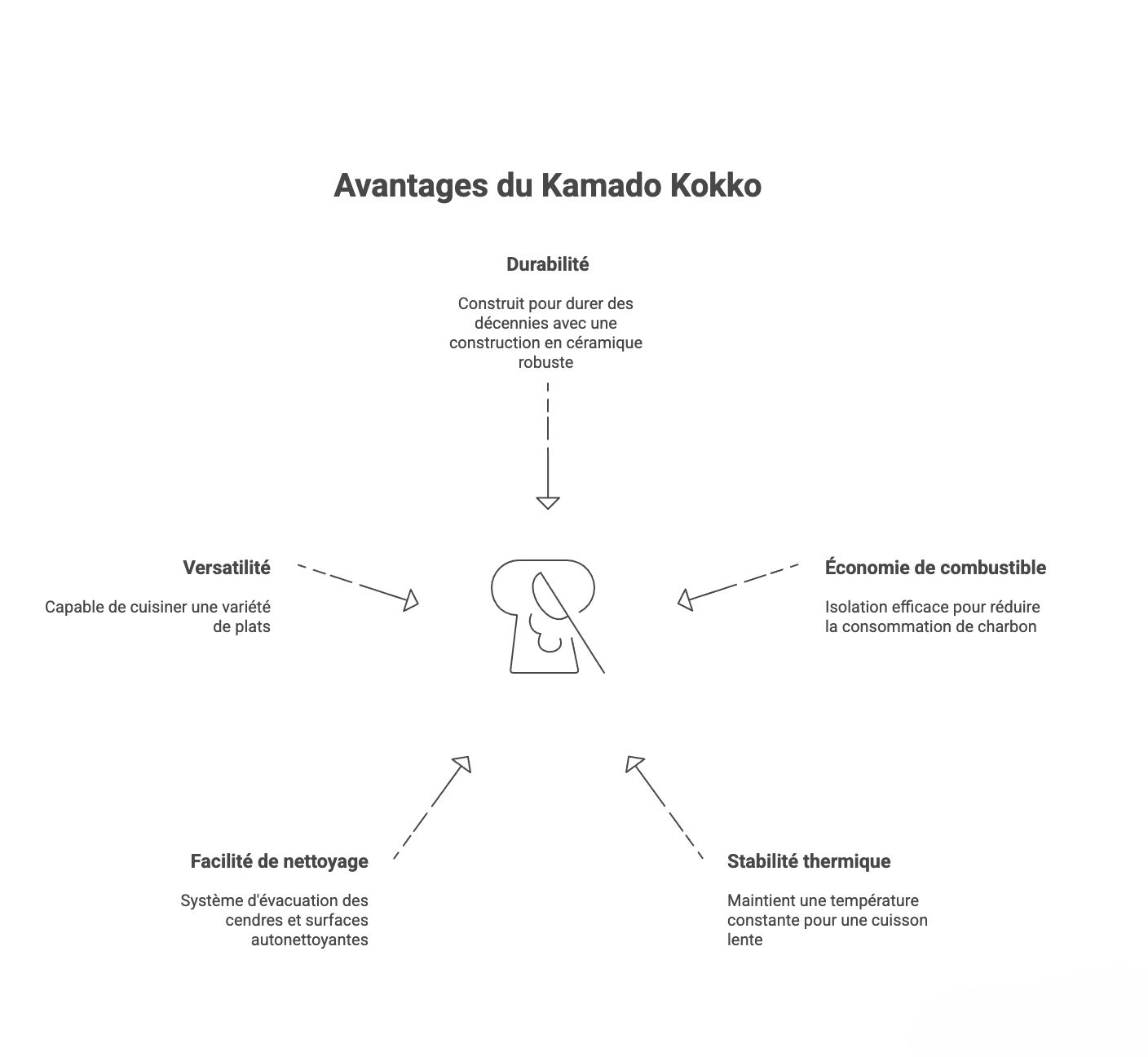
When considering how to choose your kamado, the Kokko model offers considerable advantages. Its exceptional durability is a major asset. Thanks to its robust refractory ceramic construction, a well-maintained Kokko Kamado can last several decades, unlike conventional metal barbecues.
Fuel efficiency is another significant advantage. Kokko’s excellent insulation allows you to complete entire cooks with a reduced amount of charcoal. This energy efficiency translates into substantial long-term savings.
The thermal stability of the Kokko is especially valued for slow cooking. Once the desired temperature is reached, it remains steady for hours without frequent adjustments. This feature is ideal for smoking techniques or low-temperature cooking.
Moreover, how to clean a kamado is an important question when choosing your grill. Kokko makes this easy with its ash removal system and high-temperature self-cleaning interior surfaces. Minimal but regular maintenance is all it takes to keep your kamado performing year after year.
How a Kamado barbecue works
The culinary magic of a Kokko Kamado is based on ingenious technical principles that are worth understanding to make the most of this appliance. Learning how a kamado works lets you optimize every cook and explore all its gastronomic possibilities.
Convection cooking principle
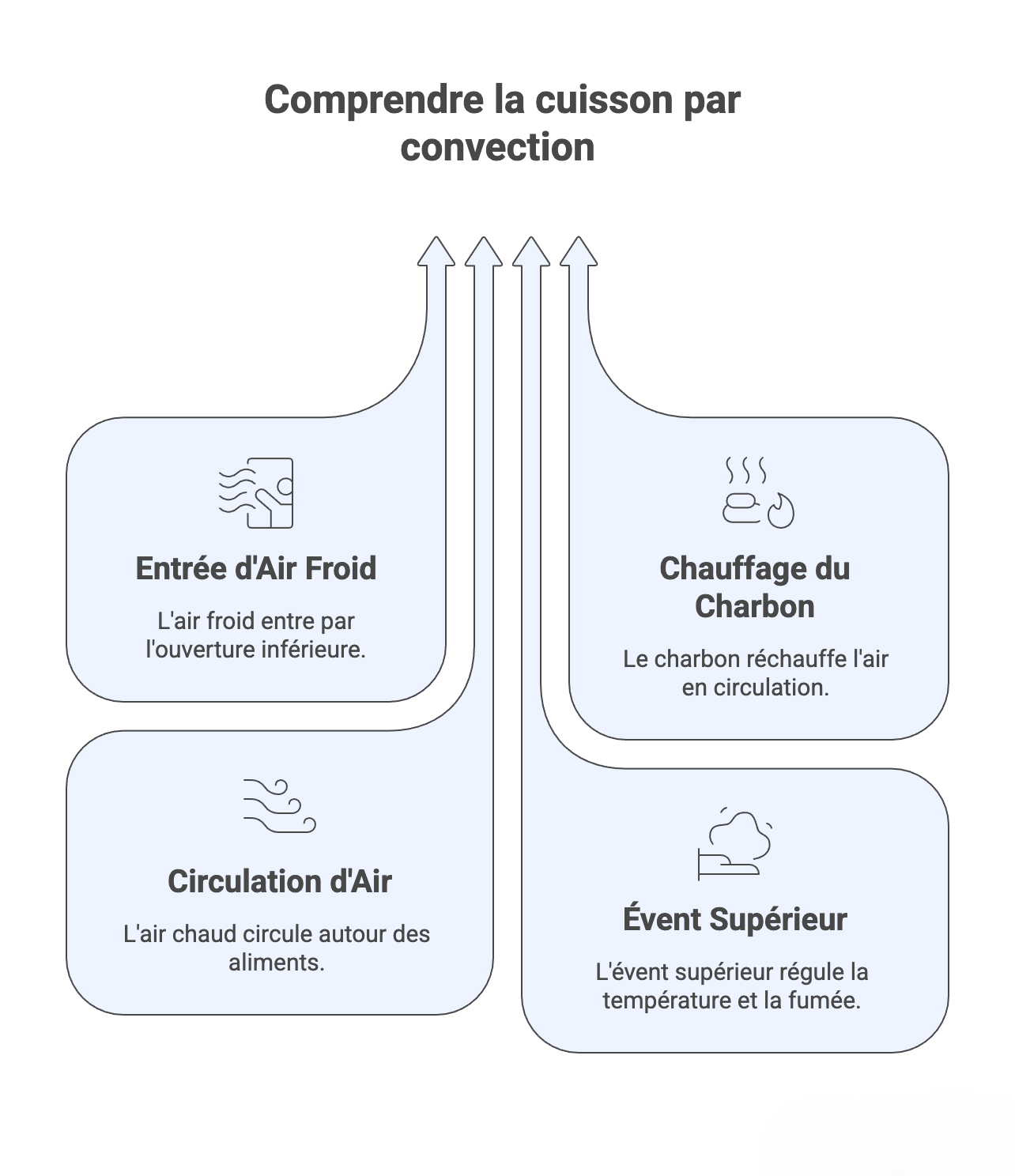
The Kokko Kamado uses a natural convection system at the heart of its operation. Cold air enters through the lower opening, heats up as it passes over the charcoal, then circulates around the food before escaping through the top vent. This circular airflow explains how a kamado barbecue works and why it delivers perfectly even cooking.
The principle is based on a balance between air intake and exhaust:
- The bottom vent mainly controls fire intensity
- The top vent regulates temperature and smoke release
- Coordinated adjustment of both vents allows for precise control
The Kamado’s ability to maintain stable temperatures for hours without intervention is due to this self-regulating natural convection. Once you’ve found the ideal vent settings, the temperature remains steady, making it much easier to master how to use a kamado for long cooks. The more you open the bottom vent and the top chimney, the higher the temperature will rise. The more you close the bottom vent and the top chimney, the lower the temperature you’ll maintain.
Materials and thermal insulation
Ceramic is the essential material of the Kokko Kamado and is the key to its outstanding performance. This high-quality refractory ceramic offers several decisive properties:
First of all, it offers extraordinary thermal insulation. So, even when the interior temperature reaches up to 400°C, the outer surface remains relatively cool to the touch. This feature ensures enhanced safety during use.
The fiberglass gasket completes this insulation system. Resistant to extreme temperatures, it seals the junction between the dome and the base, preventing unwanted air leaks. This airtightness is a crucial factor when you want to understand how a kamado works with precision.
The inner stainless steel grill also plays a key role in the optimal performance of the Kamado. It stores heat and transfers it directly to your food by conduction, creating those signature grill marks while ensuring perfect cooking.
Differences from a classic barbecue
The Kokko Kamado stands apart from traditional barbecues thanks to several technical features that directly influence how you use it.
Firstly, unlike conventional grills often made from thin metal, the Kokko retains heat for hours thanks to its thick ceramic walls. This thermal retention allows for slow, steady cooking without the need for frequent fuel additions.
Secondly, the temperature control of a Kamado offers remarkable precision. While a classic barbecue usually operates with just two or three rough heat levels, the Kokko lets you finely adjust the temperature between 80°C and 400°C. This wide range explains why how to choose your kamado often depends on the cooking techniques you want to explore.
Lighting and preparing your Kokko Kamado
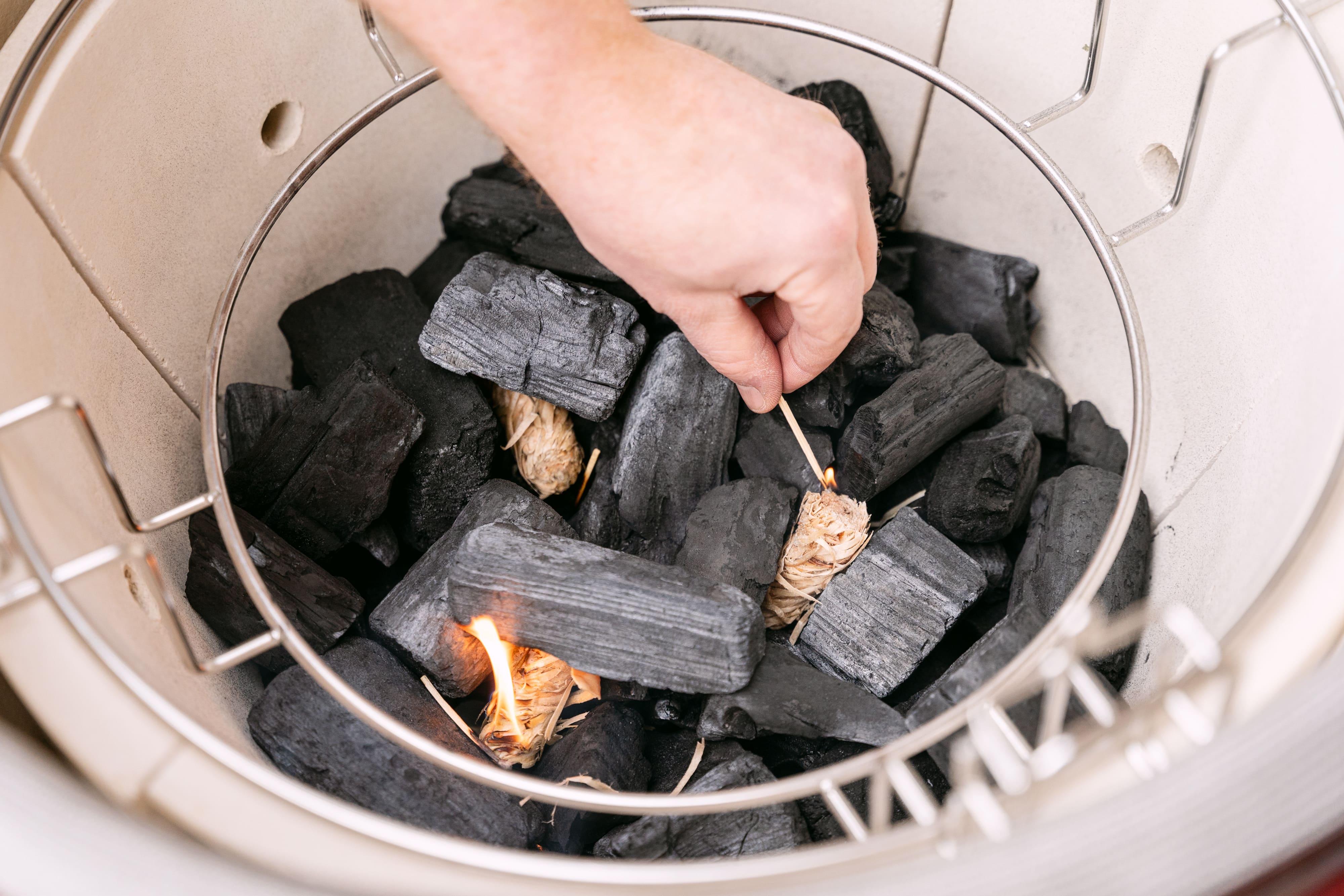
Lighting your Kokko Kamado is a crucial step for perfect grilling results. This initial phase determines not only the quality of your cooking, but also the energy efficiency of your kamado. Mastering these first steps lets you unlock the full culinary potential of this ceramic barbecue.
Choosing the right charcoal
The choice of fuel has a direct impact on the performance of your Kokko Kamado. To truly understand how a kamado works at its best, it’s essential to use premium quality charcoal. Natural lumpwood charcoal in large pieces is especially recommended for several reasons:
First, this type of charcoal produces less ash, reducing the risk of clogging the lower vents. In addition, its slower burn ensures the thermal stability essential for long cooks. The larger pieces also allow better airflow between the embers.
It is best to avoid compressed charcoal briquettes, which often contain chemical additives. These substances can affect the taste of your food and compromise the unique culinary experience offered by the Kamado.
For low-temperature cooking or smoking, adding a few pieces of aromatic wood (oak, olive, lemon, almond) will enhance the flavors.
Steps to light the Kamado
Lighting the Kokko Kamado requires a specific method to ensure a steady and even rise in temperature. Here are the essential steps for how to use a kamado during this crucial phase:
- Fully open the lid and both vents (top and bottom)
- Arrange the charcoal in a pyramid shape in the center of the firebox
- Place 1 or 2 natural firelighters (wood or paraffin cubes) in the center of the charcoal
- Light the cubes and let the fire ignite for 10 to 15 minutes with the lid open
- Once a few embers have formed, close the lid without installing the interior accessories yet
- Gradually adjust the vents to reach the desired temperature
It is essential to avoid liquid or chemical firelighters, as they can soak into the ceramic and permanently alter the flavors. Similarly, using a blowtorch may damage the seals and internal components.
Recommended preheating time
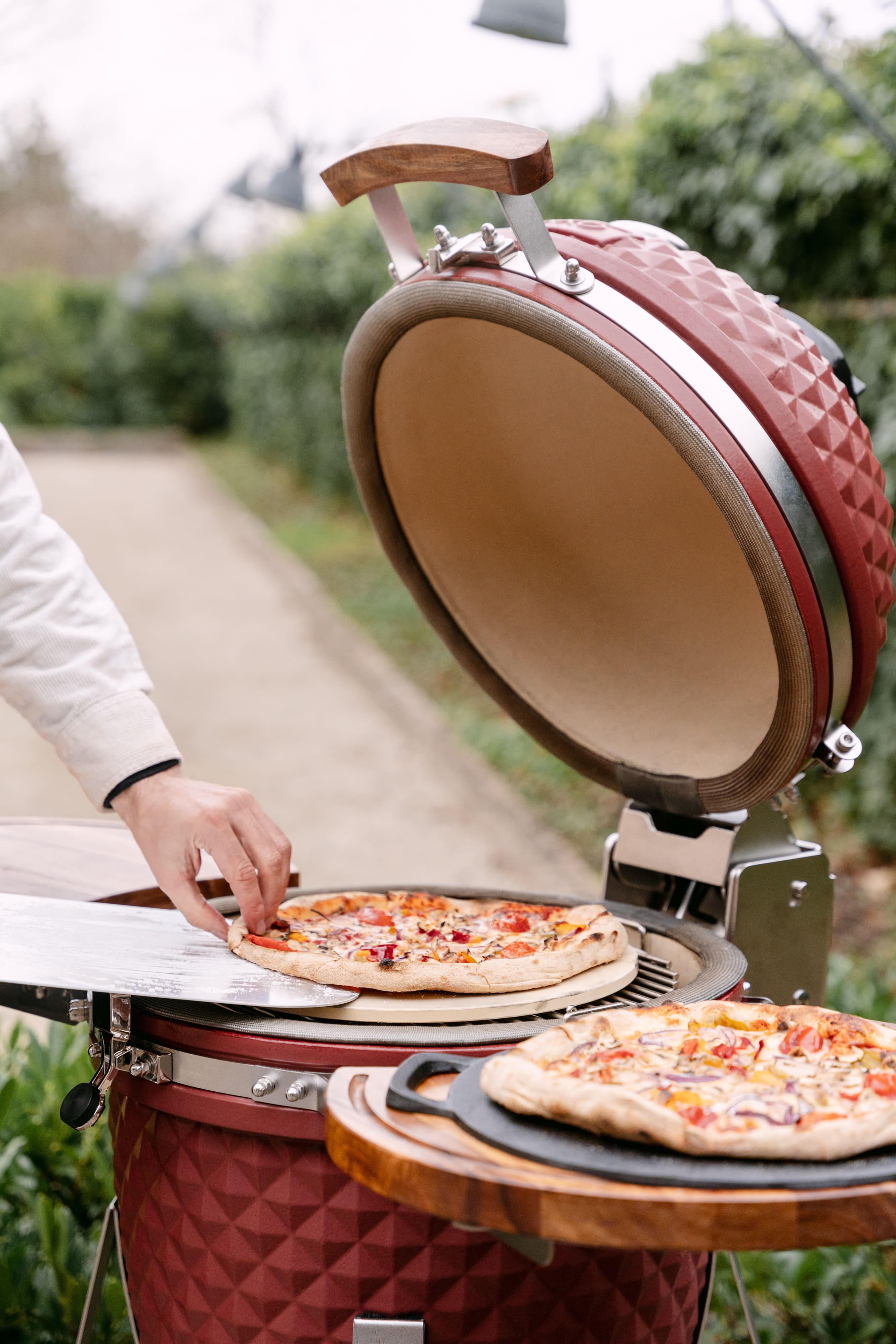
Preheating is a crucial step to fully unlock the potential of your Kokko Kamado. Understanding how a kamado barbecue works means respecting these preparation times, which vary depending on the cooking method:
For high-temperature grilling (250°C and above), a preheating time of 15 to 20 minutes is generally required. During this period, the ceramic walls gradually store heat, which they will then redistribute evenly.
For indirect cooking at medium temperature (150-200°C), 10 to 15 minutes is usually sufficient. For low-temperature smoking (110-130°C), allow about 10 minutes before installing the deflectors and grates.
A reliable indicator of optimal preheating is the absence of thick white smoke. When the Kamado emits only a light, almost transparent smoke, it means the charcoal has reached its ideal combustion temperature.
At this stage, you can fine-tune the airflow settings. This step is crucial when considering how to choose your kamado, as the precision of thermal control depends on the quality of the vents and their adjustment mechanism.
Master temperature and cooking styles
Mastering temperature is the key to unlocking the full culinary potential of the Kokko Kamado. Once the grill is properly lit, different techniques allow you to achieve a range of results, from intense searing to slow cooking.
Adjust the airflow
Precise temperature control is one of the major strengths of the Kokko Kamado. To understand how a kamado barbecue works, you need to grasp the essential role of the two vents:
The lower vent, located beneath the firebox, regulates the oxygen supply. The wider this opening, the more intense the combustion and the higher the temperature. For high-temperature cooking (250-400°C), the opening should be about 75%. Conversely, to maintain moderate heat (150-200°C), an opening of 25 to 50% is usually sufficient.
The top vent, located on the dome, controls the release of hot gases and smoke. Adjusting it fine-tunes the temperature and influences the intensity of smoking. For a rapid rise in temperature, both vents should be fully open. Then, gradually adjust them until you reach the desired temperature.
Direct vs indirect cooking
The Kokko Kamado offers two main cooking methods that perfectly illustrate how to use a kamado with versatility.
| Type of food | Temperature | Vent settings | |
| Direct cooking |
Quick grilling Steaks Burgers Vegetables |
Between 200 and 350°C | Open to about 50-75% |
| Indirect cooking |
Large cuts Roasts / Whole poultry Unattended cooking |
Between 150 and 200°C | More restrictive vents 25-50% |
To switch from one method to another, it’s best to plan this transition from the start rather than changing the setup during cooking, as this could disrupt the thermal balance and damage the ceramic deflectors.
Smoking and slow cooking
Smoking is one of the most popular techniques on the kamado barbecue. Kokko truly excels in this art.
Low and slow cooking can last several hours, or even overnight. For these culinary marathons, generously fill the firebox with charcoal and adjust the vents precisely. Once the temperature is stabilized, the Kokko Kamado maintains these conditions for over 10 hours without intervention, making it the ideal tool for preparing brisket, pork shoulder, or ribs.
It’s essential to avoid opening the lid frequently during these long cooks. Each opening causes a loss of heat and smoke, extending the cooking time and disrupting the thermal balance.
For more guidance, you can also check out our guide to smoking salmon efficiently.
Using the pizza stone

The pizza stone is the signature accessory that shows how to choose your kamado based on its culinary versatility. Using it transforms the Kokko Kamado into a Neapolitan pizza oven.
To prepare crispy pizzas, preheat your grill to a high temperature (350-400°C) with the stone placed on the main grate. This preheating should last at least 30 minutes so the stone can store enough heat. The vents should be opened wide (75-100%) to reach these temperatures.
Cooking is then done with the lid closed for 3 to 5 minutes. The intense heat from the stone perfectly bakes the dough from below, while convection heat cooks the toppings and cheese from above. The result closely resembles traditional wood-fired pizzas.
Maintenance and cleaning of the Kamado
Regular maintenance of the Kokko Kamado is essential to preserve its outstanding performance. Proper cleaning not only ensures optimal flavors but also significantly extends the lifespan of your grill.
When and how to clean a Kamado
The cleaning frequency of a Kokko Kamado mainly depends on how often you use it. However, some general guidelines apply. After each use, a light cleaning is necessary. In addition, a more thorough maintenance is recommended every 5 to 10 uses.
For regular cleaning, wait until the grill is completely cool. Then gently brush away any charred residue. The self-cleaning method is an effective technique: heat the Kamado to a high temperature (around 350°C) for 30 minutes, which turns food residue into ash that can be easily removed.
Cleaning the grill grate and bowl
The grill grate requires special attention. First, use a metal brush to remove food residue while the grate is still warm. For a deeper clean, remove it and wash with hot soapy water.
As for the ceramic bowl, absolutely avoid harsh chemicals that could damage the coating. Simply wiping with a dry cloth or brush is usually enough. Stubborn stains can be treated with a wooden scraper or a non-abrasive sponge.
Avoid ash buildup
Excessive ash buildup blocks airflow, directly affecting how a kamado barbecue works. Check and empty the ashtray after each use, or at least every three uses.
A special ash vacuum makes this task easier. However, always ensure the ashes are completely cold before handling. Therefore, this operation should be done a few hours after the last use.
Tips to extend lifespan
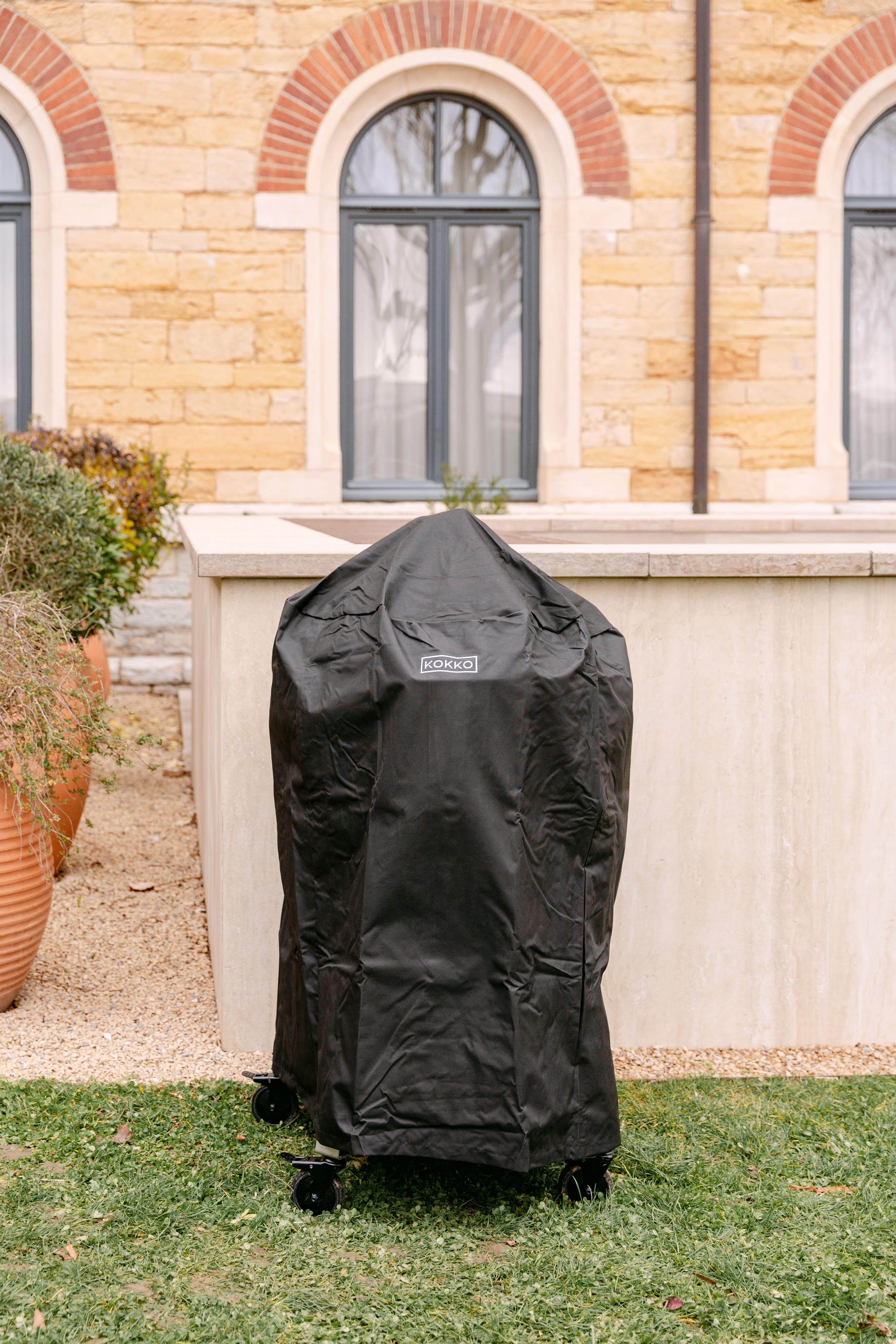
Protection against the elements is a key factor in understanding how to clean a kamado effectively. A waterproof cover protects your grill when not in use, especially during winter.
Regularly check the seals, as they can deteriorate over time. Replacing them every two or three years maintains optimal thermal efficiency. In addition, occasionally inspect the metal parts and tighten the Kokko’s band or hinge screws if needed.
Finally, avoid extreme thermal shocks that could crack the ceramic. Never pour cold water onto a hot Kamado, and do not light a device covered in snow or ice without gradually preheating it.
Tips and mistakes to avoid
To get the most out of your Kamado Kokko, a few best practices can make the difference between a perfect cook and a disappointing experience. Some common mistakes are easily avoided with a few essential precautions.
| Do not open the lid too often | Each time you open the lid, you lose significant heat—temperatures can drop by 50°C in just a few seconds. |
| Avoid chemical firelighters | Chemical firelighters pose a threat to cooking quality. These products soak into the Kamado’s porous ceramic, permanently altering flavors. |
| Close the vents tightly after use | This practice offers two advantages: saving leftover charcoal for next time and preventing moisture from entering the cooker. |
Conclusion
The Kamado Kokko is undoubtedly one of the most remarkable culinary revolutions for outdoor cooking enthusiasts. Thanks to its time-honored design perfected over generations, this cooker offers exceptional versatility that few appliances can match. From intense grilling to slow cooking and even baking crispy pizzas, the Kamado transforms every meal into a true gastronomic experience.
Admittedly, taking your first steps with a Kamado Kokko can feel intimidating. However, once you’ve mastered the fundamentals—choosing the right charcoal, proper lighting, managing the vents—the cooker becomes surprisingly intuitive. Its outstanding thermal stability, thanks to the ceramic structure, is its greatest asset, allowing for precise and consistent cooking.
Regular maintenance is essential to preserve your Kamado’s performance. Simply brushing the grill after use, periodically emptying the ashtray, and occasionally cleaning the firebox are usually enough to keep your cooker in perfect condition. These simple care steps not only ensure optimal flavors but also significantly extend the lifespan of your investment.
Ultimately, the Kamado Kokko is far more than just a barbecue—it's a truly complete outdoor cooking system. While its purchase price may seem high compared to traditional models, its exceptional durability and low fuel consumption make it a smart long-term investment. Kamado Kokko owners are unanimous: once you’ve experienced this ancestral cooking method, it quickly becomes indispensable for any discerning chef.


