

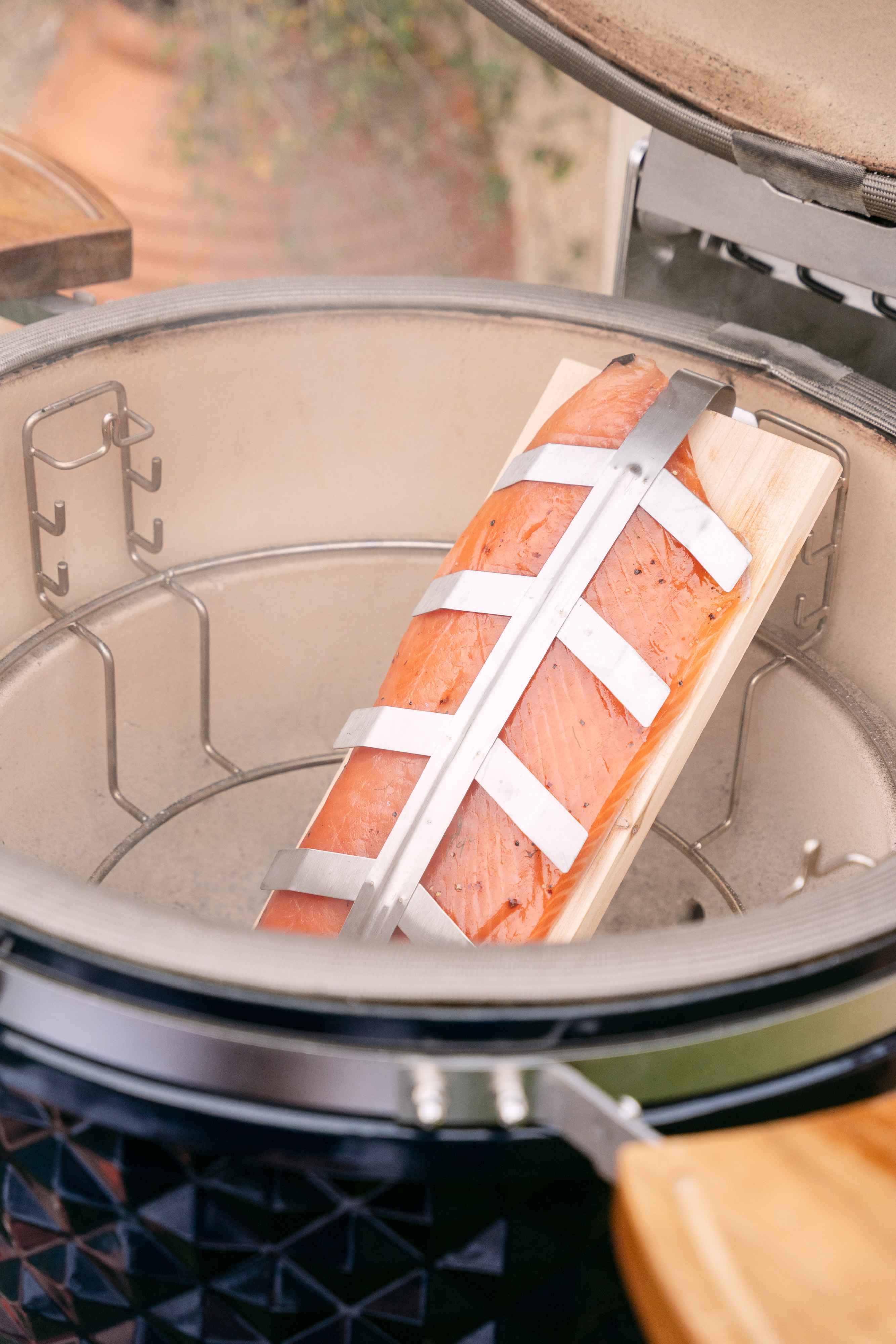
The homemade smoked salmon recipe offers a taste experience that far surpasses the industrial versions found in supermarkets. Delicately flavored and melt-in-the-mouth, smoked salmon prepared at home quickly becomes a culinary pride to share with others.
In fact, preparing smoked salmon is not as complex as you might think. From curing time and salmon selection to the actual smoking process, each step is accessible to the home cook. This guide details the entire process: choosing your ingredients, the necessary equipment (especially the Kamado Kokko salmon smoker, renowned for its versatility and precision), and the techniques to achieve perfectly balanced homemade smoked salmon. In addition, Kokko smoking accessories help optimize your results, turning a simple recipe into a true culinary masterpiece. Whether you’re new to smoking salmon or already experienced, this step-by-step guide will lead you to guaranteed success.
Essential equipment for smoking salmon
To master homemade smoked salmon, having the right equipment is essential. The right tools turn a simple culinary attempt into a gastronomic success. Here are the essential tools you need to master salmon smoking.
Smoking with the Kamado Kokko
The Kamado Kokko is a revelation for smoking enthusiasts. This type of salmon smoker, inspired by traditional Japanese techniques, stands out for its ceramic structure that maintains a constant temperature—an essential element for successful smoking. Unlike traditional smokers, the Kamado Kokko offers remarkable versatility.
Its innovative design lets you control the temperature precisely between 70°C and 400°C, making it ideal for smoking salmon, which needs gentle, prolonged heat. In addition, its dual ventilation system ensures optimal smoke circulation around the fish, guaranteeing even infusion of aromas.
The thermal insulation capacity of the Kamado Kokko is also a major advantage. This feature allows you to maintain a stable temperature for several hours while using less fuel. This is crucial for preparing smoked salmon, which often requires long smoking times.
Recommended Kokko smoking accessories
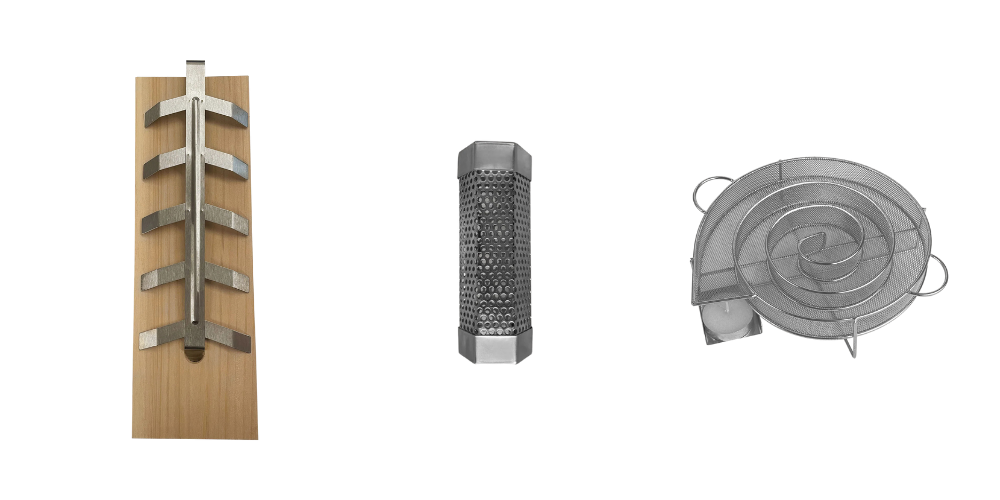
To make the most of your Kokko Kamado, certain specific accessories are essential:
- Cold smoke maze – Ideal for cold-smoking salmon, this stainless steel maze produces a fine, steady smoke for tender, delicately flavored salmon. Optimizes airflow and makes cleaning your Kokko easier.
- Smoke generator tube – Perfect for hot-smoking salmon, it distributes an even smoke and lets you add chips without opening the lid, preserving both temperature and flavor.
- Special fish holders – These stainless steel holders keep the salmon in the ideal position for even exposure to smoke.
The combination of these Kokko smoking accessories turns what could be a complex process into a perfectly controlled experience, even for beginners in the art of smoked salmon.
Thermometer, grates, wood chips
The thermometer is arguably the most crucial tool after the smoker itself. A digital probe thermometer with remote reading lets you monitor the temperature without opening the Kamado, thus avoiding harmful temperature fluctuations. For homemade smoked salmon, maintaining a temperature between 65°C and 85°C is ideal.
When it comes to grates, opt for stainless steel ones that resist corrosion and high temperatures. Fish-specific grates, with their non-stick surfaces, make it much easier to handle salmon without damaging it.
As for wood chips, they play a decisive role in the final flavor profile:
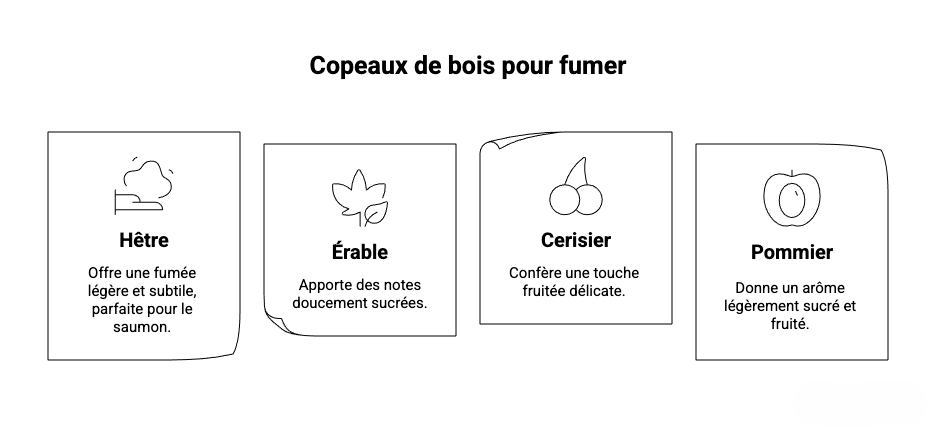
- Beech: Delivers a light, subtle smoke, perfect for salmon
- Maple: Brings gently sweet notes
- Cherrywood: Adds a delicate fruity touch
- Applewood: Delivers a lightly sweet, fruity aroma
It’s recommended to soak the wood chips for about 30 minutes before use to prolong combustion and achieve denser smoke. However, this step is optional with the Kamado Kokko, whose optimized ventilation system already provides excellent combustion control.
The quality of the salmon’s curing time before smoking is just as important as the equipment used. However, even the best preparation process won’t deliver optimal results without the right tools. Investing in quality equipment like the Kamado Kokko and its specialized accessories is the first step toward successful salmon smoking.
Preparing salmon: the right techniques
Preparing the fish is the essential step before any successful smoking. A perfect homemade smoked salmon recipe begins well before lighting the smoker, starting with the selection of the raw ingredient. Every action matters and directly influences the final quality of the product.
Choosing quality salmon
The excellence of homemade smoked salmon depends above all on the quality of the raw fish. For the best smoked salmon preparation, always choose fresh salmon over frozen. Here are the key criteria for recognizing a good salmon:
- Firm, elastic flesh that springs back after gentle pressure
- Even pink-orange color with no brown or grayish areas
- Fresh scent reminiscent of the ocean, with no ammonia notes
- Bright, bulging eyes if buying a whole fish
- Firmly attached and shiny scales
Wild salmon generally offers firmer, more flavorful flesh and is less fatty than its farmed counterpart. However, some responsible farms produce excellent fish. To ensure freshness, buy preferably from a trusted fishmonger who can advise you on the product’s origin.
Fillets weighing around 1 to 1.5 kg are ideal for a first smoking experience. This size allows for easy handling, especially on the special Kokko Kamado grates designed to optimize smoke circulation around the fish.
Pin-boning and slicing
Once you’ve selected your salmon, the pin-boning stage is crucial. Bones can spoil the tasting experience and must be carefully removed before smoking the salmon.
To remove pin bones efficiently, place the fillet skin-side down on your work surface. Gently run your fingers over the entire surface to locate the bones. Use fish bone tweezers or a dedicated culinary tweezer to extract each bone in the direction it is embedded. This careful method prevents tearing the flesh.
When it comes to cutting, you have two options:
Firstly, you can work with whole fillets, which are especially suited to Kokko’s smoking accessories that keep the fish in the ideal position throughout the smoking process.
Secondly, to make smoking large salmon easier, cut the fillet into regular portions of about 300 to 400 grams. This technique ensures even salt penetration during the salmon salting time before smoking, as well as uniform exposure to smoke.
For perfect slices after smoking, cut perpendicular to the grain of the fish, using a sharp, slightly dampened knife.
Cleaning and shaping
Before salting, meticulous cleaning of the salmon is a crucial step. Rinse the fish thoroughly under cold water to remove any remaining scales or impurities. Then gently pat it dry with paper towels.
Shaping the fillet is designed to optimize the fish’s exposure to smoke and make it easier to handle later. Remove the thinner belly section (also called "ventrèche"), which would cook too quickly in the salmon smoker. This part can be set aside for separate cooking or enjoyed as tartare.
If you are preparing a whole fillet, even out its thickness by trimming the edges slightly to achieve a rectangular shape. This uniformity ensures the salt and smoke penetrate evenly.
Next, check that all pieces of black skin (known as "melanin") have been removed, as they can impart bitterness to the final product. Careful inspection under good lighting will help you spot them.
To make handling easier when smoking in your Kokko Kamado, you can place the fillets on parchment paper or use the special fish racks available among Kokko’s smoking accessories. These racks keep the salmon in the optimal position, ensuring ideal smoke circulation around the fish.
At this stage, your salmon is ready for the next step: salting, essential for perfecting your homemade smoked salmon. This careful preparation lays a solid foundation for the entire smoking process.
Salting salmon: techniques and timing
Curing is the decisive step that transforms a simple salmon fillet into the perfect base for smoking. This crucial phase in the homemade smoked salmon recipe directly influences the texture, shelf life, and of course, the final flavour. Mastering curing techniques is therefore an essential skill for any smoked salmon enthusiast.
Curing time for salmon before smoking
The ideal curing time depends mainly on the thickness of the fillet. For perfect homemade smoked salmon, precise timing is essential:
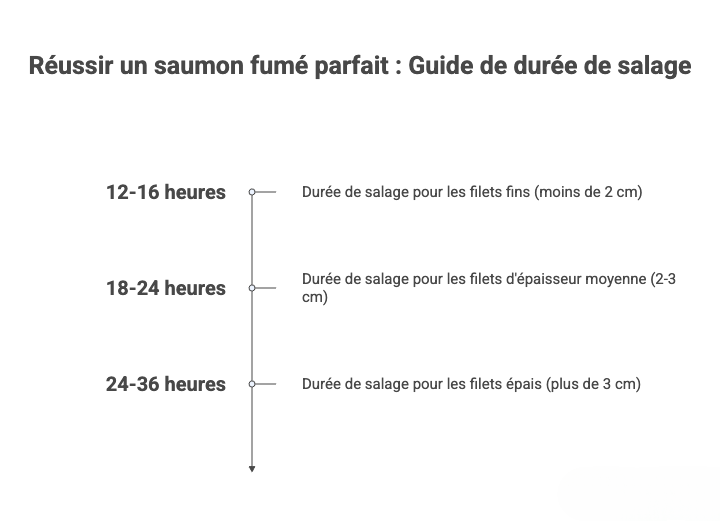
- For a thin fillet (less than 2 cm): 12 to 16 hours of curing is sufficient
- For a medium fillet (2–3 cm): 18 to 24 hours are needed
- For a thick fillet (over 3 cm): 24 to 36 hours ensures optimal penetration
Insufficient curing time results in limited preservation and underdeveloped flavour. Conversely, over-curing makes the salmon too dry and overly salty. When using the Kokko Kamado, this timing precision is essential, as this salmon smoker brings out all the subtlety of a perfectly executed cure.
Temperature also plays a crucial role. Curing must always take place in the refrigerator between 2°C and 4°C to prevent any bacterial growth. Some Kokko smoking accessories, such as special trays, make it easy to transfer the salmon directly from the fridge to the smoker without excessive handling.
Dry curing vs brining
There are two main methods for preparing smoked salmon: dry curing and liquid brining. Each offers its own specific advantages.
Dry curing consists of coating the fillet directly with a mixture of salt and, optionally, sugar. This traditional technique draws out more moisture, making it ideal for smoking salmon on the Kokko Kamado, which, thanks to its precise temperature control, perfectly preserves the resulting texture. For dry curing, use about 65 to 80 g of salt per 1 kg of salmon. Apply the mixture evenly over all surfaces of the fish, then wrap it in cling film before placing it in the refrigerator.
In contrast, brining involves fully immersing the salmon in a saltwater solution. This method ensures more even salt penetration and better preserves the fish’s natural moisture. To prepare an effective brine, dissolve 100 to 120 g of salt in 1 litre of cold water. Then immerse the salmon for the appropriate time according to its thickness.
However, whichever method you choose, it is essential to thoroughly rinse the salmon with cold water after salting to remove excess surface salt. This step, often overlooked, prevents the final product from being too salty when smoked in your Kokko Kamado.
Spices and herbs to add
Adding spices and herbs during salting allows you to personalize your homemade smoked salmon. These aromatics gently infuse the flesh during the salmon’s salting time before smoking. Here are some particularly successful combinations:
- Nordic classic: crushed juniper berries, freshly chopped dill, lemon zest, and white pepper
- Intense aromatics: wild fennel, coriander, star anise, and pink peppercorns
- Sweet touch: brown sugar, orange zest, cardamom, and vanilla
- Asian fusion: grated ginger, lemongrass, kaffir lime, and a hint of soy sauce
To infuse these aromas, add them directly to the salt mixture for dry curing or to the liquid brine. The ideal ratio is about 10% herbs and spices relative to the weight of salt.
So, after perfectly mastering the salting process, your salmon will be ready for drying, then for smoking in your Kokko Kamado. Kokko smoking accessories, such as the heat deflector, will then allow you to precisely control the circulation of smoke around the salted fish, ensuring optimal absorption of wood aromas. This attention to detail from the salting stage is the foundation of an exceptional homemade smoked salmon recipe.
Salmon drying: why it’s essential
After salting, the drying stage is a crucial link in the homemade smoked salmon preparation process. Often overlooked by beginners, this phase largely determines the final quality of the product. Drying allows the salmon to develop the characteristic shiny layer called the "pellicle", which will then optimize smoke adhesion.
Refrigerator drying method
Drying in the refrigerator is the most accessible and safest technique to prepare your salmon before smoking. After rinsing and gently drying your salted fish, place it skin-side down on an elevated rack. This position allows optimal air circulation around the entire surface of the fillet.
Then place everything in the lower part of the refrigerator, at a constant temperature between 2°C and 4°C. One key point: do not cover the salmon during this stage. Exposure to the refrigerator’s cool, dry air encourages the gradual evaporation of surface moisture.
For Kamado Kokko users, certain dedicated smoking accessories make this step much easier. In particular, special salmon racks keep the fish in the ideal position throughout the drying process, then allow you to transfer it directly to the smoker without excessive handling that could damage the precious pellicle.
Ideal duration
The drying time mainly depends on the thickness of the fillet and the desired intensity of drying. As a general rule, allow for:
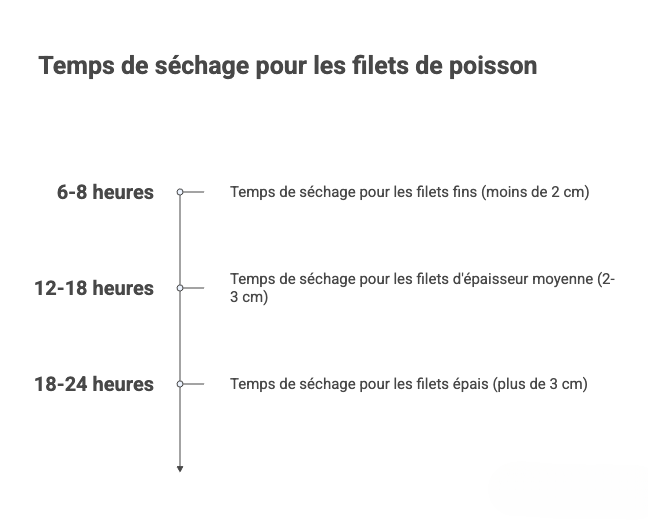
- 6 to 8 hours for a thin fillet (less than 2 cm)
- 12 to 18 hours for a medium fillet (2–3 cm)
- 18 to 24 hours for a thick fillet (over 3 cm)
The salmon is ready when its surface becomes slightly shiny and tacky (sticky to the touch). This indicates the formation of a protective pellicle, essential for smoking salmon.
A simple test lets you check if the drying is sufficient: gently touch the surface of the fish with your finger. If it leaves a slight imprint that quickly disappears, the drying is optimal. If the flesh still feels moist or your finger sinks in too easily, extend the drying for a few more hours.
Impact on the final flavor
Drying has a major impact on the organoleptic qualities of homemade smoked salmon. First, it concentrates the flavors by reducing water content, intensifying the distinctive taste of salmon.
Secondly, the pellicle formed during drying plays a crucial role in absorbing smoke aromas. Insufficient drying leaves the surface too moist, preventing aromatic particles from adhering properly. Conversely, over-drying can dehydrate the fish too much, making it dry and fibrous after smoking.
Finally, perfect drying gives the salmon that unique texture—half firm, half melt-in-the-mouth—that makes a great smoked salmon recipe so irresistible. In the Kamado Kokko, with its precise airflow and temperature control, properly dried salmon will develop an even amber color and a perfectly balanced texture.
This step perfectly prepares the fish to absorb the wood aromas that your salmon smoker will infuse. Master smokers often say that the quality of the drying process determines 50% of the final success of smoked salmon.
Smoking salmon: perfect results every time
The long-awaited moment has finally arrived: after preparation and drying, it’s time to smoke the salmon itself. This final step transforms your careful preparation into a true gourmet delight. The smoking process requires precision and attention, but the exceptional results of your homemade smoked salmon will more than reward your efforts.
Smoking temperature and duration
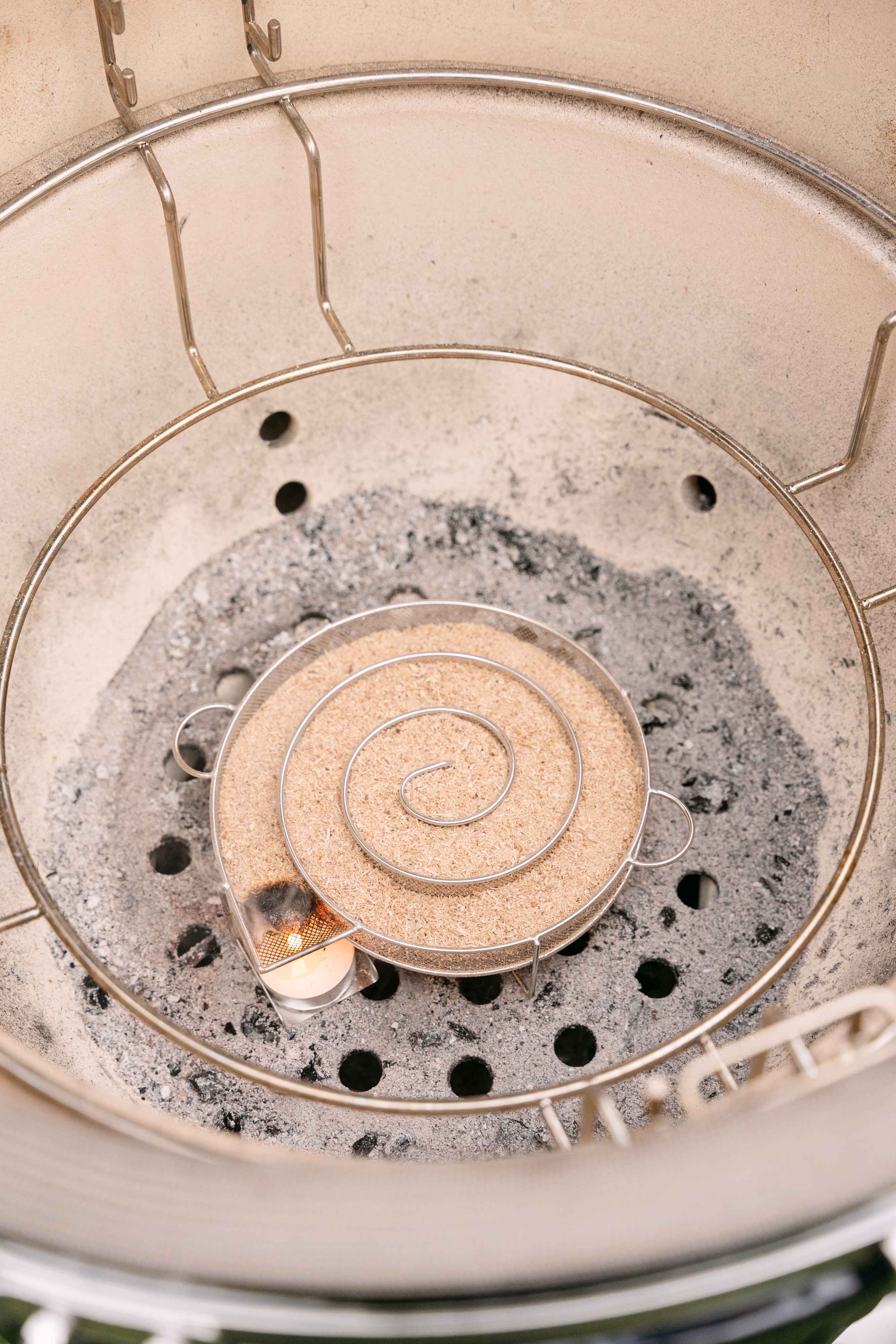
To master your smoked salmon recipe, temperature control is essential. There are two main techniques:
Cold smoking (20°C-30°C) preserves the silky texture of the salmon and allows the aromas to deeply infuse. This traditional method takes between 2 and 4 hours depending on the thickness of the fillet and the desired intensity of flavor.
Hot smoking (70°C-80°C), on the other hand, partially cooks the fish while infusing it with flavor. Allow 45 minutes to 1.5 hours for optimal results. This technique creates bolder flavors and a slightly firmer texture.
Whatever method you choose, keep a close eye on the color of the salmon during smoking. A beautiful golden amber usually signals a perfectly smoked result. Also, avoid opening your salmon smoker too often, as each opening causes a loss of temperature and smoke, which prolongs the process.
Which wood to use for a subtle flavor
The choice of wood has a major impact on the final flavor profile of your homemade smoked salmon. Some varieties pair especially well with this delicate fish:
- Beech: the classic choice, offering a mild and balanced smoke
- Maple: adds lightly sweet notes that are highly appreciated
- Cherrywood: imparts a fruity aroma and a beautiful rosy color
- Applewood: brings a subtly fruity and gentle flavor
- White oak: for a more pronounced, traditional smoke
Generally, medium wood chips produce the most consistent smoke. Some enthusiasts slightly moisten them before use to extend their burn time and soften the aromas released.
On the other hand, absolutely avoid softwoods (pine, fir, spruce) as they contain toxic substances. Likewise, woods with very strong flavors like mesquite or walnut can easily overpower the natural delicacy of salmon.
Using the Kokko Kamado for perfectly controlled smoking
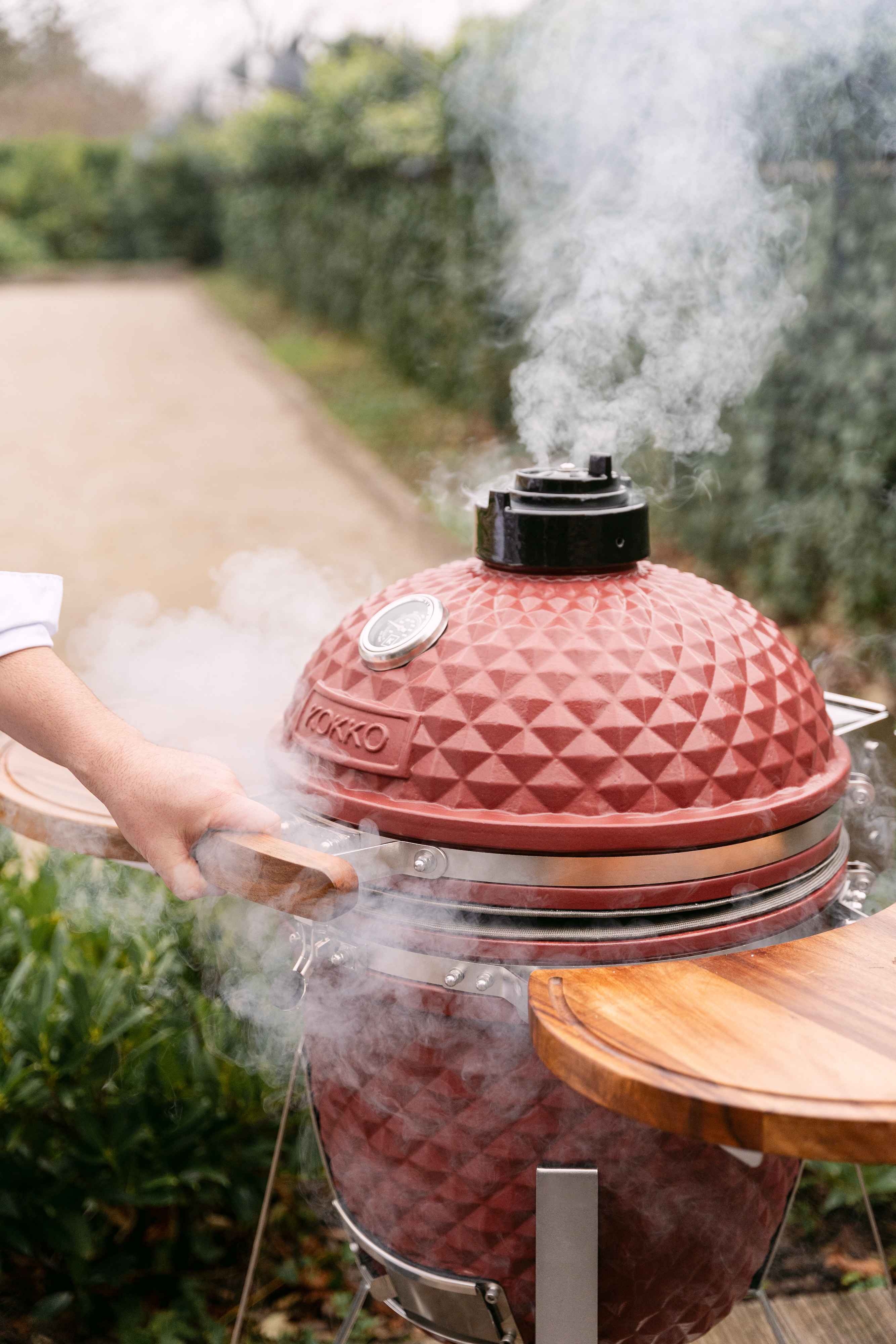
The Kamado Kokko is the perfect ally for perfectly controlled salmon smoking. Its ceramic structure maintains a remarkably stable temperature, a fundamental element for achieving exceptional smoked salmon.
To make the most of its capabilities, start by preheating your Kamado Kokko to the desired temperature. Then, place the heat deflector (an essential Kokko smoking accessory) to ensure indirect heat. Add the wood chips to the dedicated charcoal basket, then position your salmon on the upper grate.
The dual ventilation system of the Kamado Kokko allows for precise control of smoke intensity. For delicate smoking, set the lower vents to about 1/4 open and the top vent to 1/3. These fine adjustments ensure optimal smoke circulation around the fish.
Thanks to the excellent thermal insulation of the Kamado Kokko, you can maintain consistently low temperatures for several hours without excessive fuel consumption—a major advantage for cold smoking, which requires patience and consistency.
The built-in lid thermometer, ideally complemented by a remote probe (available among Kokko accessories), lets you monitor the temperature precisely without opening the smoker, preserving the controlled environment essential for perfect smoked salmon.
After smoking, let your homemade smoked salmon rest for a few hours before tasting. This final rest allows the flavors to settle and the texture to reach perfect balance. Then, slice thinly and enjoy the fruit of your patience and expertise.
Storage and hygiene after smoking
Once the salmon smoking process is complete, proper storage becomes just as crucial as preparation. Even the most delicious homemade smoked salmon would quickly lose its qualities without adequate storage techniques. Mastering these methods not only extends the life of your culinary creation but also preserves all its flavors.
Cool storage
Once fully cooled, the smoked salmon should be immediately transferred to the refrigerator. First, wrap it in parchment paper or aluminum foil, then place it in an airtight container. This double protection prevents dehydration while isolating the intense aromas that could permeate other foods.
The ideal temperature is between 0°C and 4°C, a range where the dedicated storage trays from Kokko smoking accessories truly prove their worth. Their design keeps smoked salmon in optimal conditions without crushing its delicate texture.
Also, avoid storing your homemade smoked salmon in the refrigerator door, where temperature fluctuations are more frequent. Instead, choose the bottom shelf, which is naturally colder and more stable.
Optimal shelf life
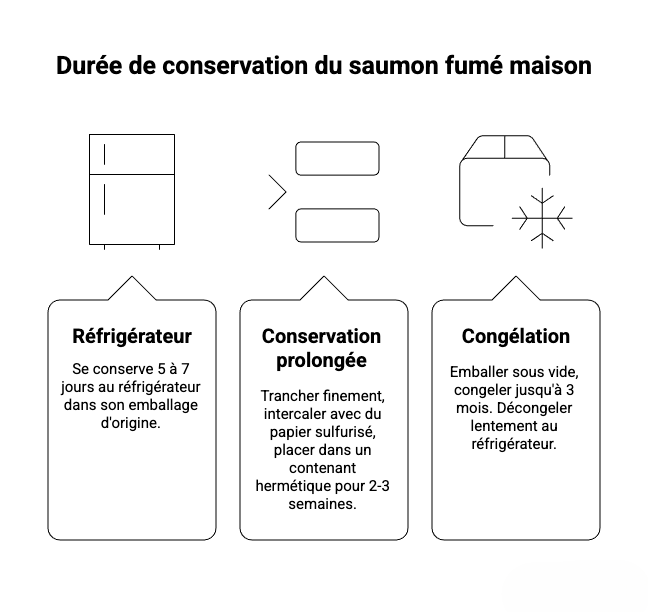
The shelf life of homemade smoked salmon depends mainly on its salt content and level of dehydration. Generally, salmon properly smoked in a Kokko Kamado will keep for 5 to 7 days in the refrigerator in its original packaging.
To extend this period to 2-3 weeks, a useful tip is to slice it thinly and separate each slice with parchment paper before placing them in an airtight container. This method limits oxidation and preserves the melt-in-the-mouth texture.
Freezing is also an excellent option for long-term storage. Homemade smoked salmon, carefully vacuum-sealed, can be kept up to 3 months in the freezer without significant loss of quality. However, thawing should be done slowly, ideally over 24 hours in the refrigerator.
Equipment hygiene
After each smoked salmon session, a thorough cleaning of your Kokko Kamado is essential. First, let the unit cool completely before handling. Then, remove ashes and wood residue using the dedicated shovel included with Kokko smoking accessories.
The grates should be cleaned with hot soapy water immediately after use, while they are still warm. For stubborn residue, a special barbecue wire brush is effective without damaging the materials.
As for the inside of the Kamado, a simple brushing is usually enough—avoid detergents that could soak into the ceramic and affect future smoking sessions. The layer of creosote that naturally forms inside actually enhances smoking performance and does not need to be systematically removed.
This careful attention to preservation and hygiene not only ensures safe tastings but also the longevity of your future smoked salmon recipes.
Homemade smoked salmon recipes

After all the effort invested in preparing your homemade smoked salmon, it’s time to enjoy the fruits of your labor with simple yet elegant recipes. The unmatched quality of salmon prepared in your Kamado Kokko transforms even the simplest dishes into memorable gourmet experiences.
Open sandwiches and toasts
Open sandwiches are perhaps the purest way to enjoy your homemade smoked salmon. On a slice of lightly toasted rye bread, spread a thin layer of salted butter or cream cheese. Then arrange a few thin slices of your smoked salmon, cut against the grain to preserve its delicate texture achieved through the precise temperature control of the Kamado Kokko.
To elevate these open sandwiches, add a few capers, thin slices of red onion, a squeeze of lemon juice, and a hint of fresh dill. For a more sophisticated version, include avocado slices and a few quail eggs. The subtle wood aromas infused during smoking pair perfectly with these light accompaniments.
Fresh salads
In summer, homemade smoked salmon fits perfectly into refreshing salads. Toss tender mesclun leaves with citrus segments (grapefruit or blood orange), a few slices of crisp fennel, and your precious strips of smoked salmon. A light vinaigrette made with olive oil, lemon juice, and a touch of honey brings everything together beautifully.
A warm new potato salad with smoked salmon, soft-boiled eggs, and fresh herbs also makes for a complete and balanced meal. The delicate aromas infused during smoking in your Kamado Kokko are fully revealed at room temperature, making quality smoking accessories a worthwhile investment.
Smoked salmon pasta
For a comforting dinner, smoked salmon pasta offers a delicious option. Cook tagliatelle until al dente, then fold in a light sauce made with crème fraîche, lemon juice, and dill. Add your smoked salmon pieces at the last moment, without further cooking, to preserve the delicate aromas developed during smoking.
The precise temperature control of the Kamado Kokko during salmon smoking ensures an ideal texture that pairs beautifully with the creamy sauce. A few lemon zest shavings and a touch of freshly ground black pepper complete this simple yet elegant dish, proving that a well-executed homemade smoked salmon recipe can turn even everyday meals into memorable gourmet experiences.
Pro tips and mistakes to avoid
Mastering the details makes all the difference between an average smoked salmon and a true culinary masterpiece. Even with the best equipment like the Kamado Kokko, certain mistakes can compromise the final result. Here are expert tips to perfect your homemade smoked salmon recipe.
| Do not oversalt | For perfect balance, limit the amount to 60g of salt per 1kg of salmon and strictly respect the salting time before smoking. Indeed, salt continues to penetrate the flesh even after rinsing. |
|
Avoid overcooking |
Overcooked salmon loses its melt-in-the-mouth texture and subtle aromas. So, strictly maintain the recommended temperature in your Kamado Kokko: 70-80°C maximum for hot smoking and 25-30°C for cold smoking. |
| Regular kamado maintenance | After each use, clean the grates while they are still warm and remove the ashes once the appliance has cooled. However, avoid using harsh detergents that could penetrate the ceramic of the Kamado Kokko. |
Conclusion
Thus ends our culinary journey through the art of homemade smoked salmon. This ancestral technique, now accessible thanks to the Kamado Kokko, transforms a simple salmon fillet into a gastronomic delight. Indeed, the quality of the fish, combined with precise salting time and careful drying, forms the foundation of guaranteed success. Nevertheless, it’s truly during the smoking process that the magic happens.
The exceptional heat control of the Kamado Kokko plays a decisive role in this transformation. Its ceramic structure maintains a perfectly stable temperature, while its dedicated smoking accessories optimize the circulation of aromas around the fish. As a result, every bite reveals the subtlety of the selected wood essences.
Without a doubt, preparing homemade smoked salmon requires patience and attention to detail. However, the results far surpass anything store-bought. Each carefully executed step brings the enthusiast closer to mastering the art of smoking, especially when the process is supported by the technical excellence of the Kamado Kokko and its dedicated accessories.
So, let yourself be tempted by this culinary adventure. Mistakes are part of the learning process, but with the shared tips and the right equipment, your smoked salmon will become more perfect with every attempt. In the end, you’re not just creating a dish, but a personal expertise that will impress family and friends for years to come.


